Back on a windy February Saturday morning, the United States Military Academy at West Point launched what was to be one of its most interesting high altitude balloon projects to date.
Join HVDN Live to get the official debrief on this really interesting project detailing the February 12th launch, its payload, visualized data and its retrieval process.
APRS stands for automatic packet reporting system and "tt" stands for "touch tone". Most "radio hobbyist" people have heard of these two acronyms before, but not used together. The goal here is to explain simply how APRStt works.
APRStt is not APRS
APRS typically uses analog 1200 baud AX.25 communications that in its most simplistic form, is not very different than how modern internet works. There are headers, body, routing and other message portions that help identify, deliver, acknowledge and add value to a sent or received message.
APRStt by comparison is only made possible by some infrastructure that can decode a string of touch tones known as DTMF. Dual tone multi frequency is the same as found in telephone communications for more than 50 years.
When you press the appropriate button, your radio sends a combination of two tones below at the same time, such as the "5" key would generate both 770 Hz and 1336 Hz.
When a radio user transmits the appropriate tones, the receiving infrastructure can decode these tones and convert them to useful information such as location and status reporting that can appear on a computer screen or certain radio equipment. That essentially is how APRStt functions.
Most any radio with a keypad will include DTMF functionality and thus offers a unique capability for control or reporting via APRStt if you have the necessary receiving infrastructure from even the most inexpensive of radio, like the popular Baofeng UV5R.
Use Case #1 for APRStt: Remember the game "Battleship"?
One great example to help explain APRStt is the classic game of "Battleship" where players ask the opposition if they have a ship located in a letter and number sequence grid, such as "B5" or "FOXTROT 9". Since this is a known location on the game grid, its easy to confirm location and score either a hit or a miss.
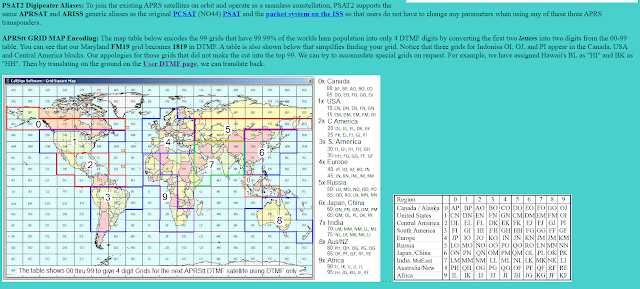
APRStt can work the same way. If you transmitted a DTMF string such as *13316248302228#, that would translate to the callsign N2HVD along with maidenhead grid square of FN31. The maidenhead system is used just like GPS coordinates, but offers a more general location in a 70 by 100 mile box.
Today, there is a satellite called PSAT2 that offers the ability for a ground user to transmit a formatted DTMF sequence on 145.980 MHz and if that message is received by the satellite as it passes overhead, the ground user will hear a computer voice acknowledgement on 145.825 MHz to confirm the contact exchange.
To dive into the super details on how *13316248302228# is calculated, you can read more at: http://aprs.org/psat2.html
Use Case #2 for APRStt: Supporting a local event
Being able to share location information like this can be applied to many real world applications such as for finding people at a special event like a large festival or even a race where not everyone will have an expensive APRS radio, but does have a DTMF capable radio.
Here is an example by the inventor of APRS, Bob Bruninga WB4APR as deployed at the Dayton Hamvention in 2010.
Making APRStt work for a marathon or other race?
Rather than thinking in terms of a location grid, another way to use APRStt is to set predefined locations long a race route which matches GPS locations.
When a user transmits a number sequence, the infrastructure can receive a DTMF string which may identify a race mile marker, athlete status, health condition and unique "bib" number. Here is an example as set up for the upcoming United States Military Academy triathlon.
Once the ten digit DTMF sequence is received and decoded, the infrastructure can transmit back a computer voice to let the support staff know the message was received, but the infrastructure can also translate this to be shared over the APRS network and appear on a map in real time.
How to make your own APRStt infrastructure?
In a follow up article, we will detail how to combine a radio with a computer interface along with the appropriate software to create your own APRStt infrastructure for your own local area or special event.
Please follow the N2WU.com blog for more on the technicals behind this with a special focus on the software and tips on ensuring a fully functional system via lessons learned by the 2021 USMA Triathlon which is taking place on August 15th 2021.
Bringing together so many amateur radio clubs focused on a single goal was actually a pretty special experience
Lets talk about the event and highlight some amazing achievements by our local amateur radio community who took part in the first annual Hudson River Radio Relay event, this year featuring Bannerman's Island.
HR3:2021 Top Op Award
Our goal as a collective group of 8 stations was to make 2,000 radio contacts in 4 hours.
While we fell short of this goal and only managed to generate 526 contacts, this was still amazing since that works out to more than 2 contacts per minute!
Brian N2BTD, John KD2PTX, James KD2VTM and Dane KD2SSS were the ones who did most of the heavy lifting that day.
They will have a lot to do next year to beat the score and fend off all other participants. Nicely done N2O OCARC Team!
From left to right, only a small part of team N2O John KD2PTX, Bruce KD2PSP, Erica N2TUC, Dane KD2SSS, & Stephen KD2JJY
HR3:2021 Individual Top Op Awards
With the N2O team logging the most collective contacts, it was Brian N2BTD (87) who just narrowly beat out Lloyd K2JVX (83) as part of the N2B team organized by HVDN for the most contacts overall. Third place goes to John KD2PTX with 59 total contacts.
What seemed to be the trend for Brian, Lloyd and John was to keep things simple. All only focused on voice modes and spent the majority of the time on 20m, but both John and Brian jumped to other bands and added even more contacts which helped them do so much amazing work.
While Brian and John both operated from fixed position mobile stations talked more about in the upcoming N2O article, Lloyd was stationary on Bannerman's Island also known as USIAP NY-047, POTA K-2079 and COTA K-00047 which will be talked about in a N2B specific article.
Lloyd K2JVX operating as N2B from Bannerman's Island - USIAP NY047's 1st activation!
HR3:2021 Grid Iron Gang Awards
A major focus of the Hudson River Radio Relay (HR3) event during the ARRL VHF Contest which overlapped our special event on June 12th was to see how many grids we could work as a group not only on VHF, but also on HF.
Steve K2GOG, the main organizer of the HR3, faced some disbelief that HF operators would share a grid locator, since that is normally something only done on VHF, satellite and some SOTA or POTA activations. As it turns out, this was not as big an issue as many had said it would be when making contacts on HF.
For the collective group of eight special event stations, a total of 134 grid squares were contacted in four hours and the N2O powerhouse team notched 77 grids.
Visualization of some of the grids worked per station as part of the first Hudson River Radio Relay
HR3:2021 Continental Distance Award
Possibly a surprise to those who were part of the Overlook Mountain Amateur Radio Club who worked very hard to reach a total of 19 contacts was the fact that they had one of the few contacts across North America to reach the furthest.
All the way on the opposite side of the country in grid CN87 was KB7THX at 2,455 miles away and Al is who to thank for pulling in two of our special event stations in out on the west coast.
While the N2S station also happened to make contact with KB7THX twice and on 20m and 40m, it was the OMARC team who did it first according to our time stamped log and is why they are crowned the champion for the HR3:2021 Continental Distance Award thanks to this effort on 17m from Kingston Point Park in Ulster County.
They grew an antenna! The N2H OMAR team getting ready. Photo foreground of David KD2MQE and Sarah. Background Jeff KJ2DOC. Visit the OMARC Facebook page for more details.
HR3:2021 Global Distance Award
The overall global distance award proved to be hotly contested between the N2O, N2B and N2D stations each reaching more than 4,000 miles away.
Beaming towards the east from FN31 was a nice 4,318 mile contact by N2B on 20m CW to Elemer HA9RE in KN08 and on 20m SSB to Matt SP2IST in JO94 for 4,033 miles.
Just to the south of N2B was the United States Military Academy at West Point station on Constitution Island (USIAP NY073) operating as N2D. They managed to reach Tibi HA7TM using 20m FT8 in JN97 for a total of 4,277 miles.
It seemed we needed to possibly get into a six digit grid square locator to try and see who was the winner since it appeared as less than 41 miles separated N2D and N2B, but it seems that an error in the log that was later found showed that N2O in FN21 magically worked a 10m band opening 4,943 miles away into Brazil in grid GG43 thanks to PU5JVA on the other end.
The Orange County ARC team behind N2O seems like the team to beat next year!
The N2D team led by N2WU on USIAP NY073 as its first official activation along with other cadets looking on
Hudson Valley Heart Award
One of the major goals of the Hudson River Radio Relay event is to promote collaboration between our local community. In this case for 2021, the QSY Society and Mt. Beacon ARC worked together to make the N2S station at College Hill Park a success.
For the future, it is our hope that other pairings of amateur radio clubs or other organizations like local schools, emergency response or other groups can work together to win the next Hudson Valley Heart Award in 2022.
Here is a nice drone video taken by Sebastian KI2D who helped Scott W2NTV, Frank W2GIO, Adam AE2AN, Shirley N2SKP and so many others make N2S an example for our region.
HR3:2021 Squeaky Clean Award
The exchange for this special event was call sign, first name and grid square. Many participating clubs have a lot to work on when it comes to accuracy and completeness when it comes to information exchange.
Having these skills is important should amateur radio ever be needed for realistic emergency communications.
Details such as a first name and location could be extremely useful for difficult situations, especially if a club callsign was used and its not clear who the operator on the other end was.
Same goes for approximate location which is possibly even more valuable compared to exchanging ARRL sections as is done during the annual ARRL Field Day event coming up on June 26th and 27th 2021.
Of a total of 72 contacts, the N2N station operated by the Peekskill & Cortland Amateur Radio Association required almost no in depth analysis based on very complete logs. Random fact checking also proved a high level of accuracy by the PCARA team.
Team N2N showing how a well organized operating position helped them possibly win the squeaky clean log award in 2021. Indian Point Nuclear Power Station is in the distance.
HR3:2021 Digital Achievement Award
Our four hour long special event focused on promoting four different types of amateur radio technology.
Analog voice and Morse code have been around for a very long time, but newer counterparts such as digital voice modes like DMR or digital data modes like FT8 are growing in popularity and relevance to the modern amateur radio enthusiast.
The Crystal Radio Club who operated as N2V for the event should not fool anyone with its name since all but one of its contacts came on FT8 and split between 6m, 20m and 40m bands.
For the future, we will look at any special event station that is part of HR3 with the highest percentage of both any digital voice or digital data mode contacts made compared to the overall total they are able to log. Hopefully Paul K2PH and team can share the secrets of operating digital modes from the field so effectively.
HR3:2021 Hudson Valley Tough Award
Surely, having to deal with loading all the gear on a boat and operate from an island plus having to bring it all up and down more than 70 wooden steps would make for an easy award for N2B, but the Putnam Emergency Amateur Radio League (PEARL) seemingly had much tougher conditions to deal with as part of the N2U contingent located at Castle Rock Unique area as part of POTA K-5161 and K-2079 plus COTA K-00825 in grid FN31.
According to Diana KD2AEG, there was nearly 5 foot tall grass that needed to be flattened out to make a clearing for the antenna and operating tent.
After making quasi crop circles with repurposed 4 foot military mast and a length of paracord, they needed to also do some emergency Power Pole repairs to power up the radios.
While they managed only four contacts and three of those coming via Morse code, much was learned and they are deserving of this year's Hudson Valley Tough Award.
Those scary clouds and tall grass were just a few more things which did not prevent PEARL's N2U station from operating as part of Hudson River Radio Relay
HR3:2021 Awards Summary
HR3:2021 Top Op Award - N2O - OCARC
HR3:2021 Individual Top Op Award - N2O -N2BTD
HR3:2021 Continental Distance Award - N2H - OMARC
HR3:2021 Global Distance Award - N2O - OCARC
HR3:2021 Grid Iron Gang Award - N2O - OCARC
HR3:2021 Hudson Valley Heart Award - N2S - QSY Society & MBARC
HR3:2021 Squeaky Clean Award - N2N - PCARA
HR3:2021 Digital Achievement Award - N2V - CRC
HR3:2021 Hudson Valley Tough Award - N2U - PEARL
Since this is the first year of the Hudson River Radio Relay, we are going to allow each winner to create an award in the form of some sort of novelty that can be passed on to next year's winner, likely at some sort of official awards lunch for all those who participated in the 2022 event, for which we already have reserved the same special event callsigns.
Stay tuned for more details from each of our 2021 participants in an upcoming series of articles. The map below shows where all eight stations were located and direction of all contacts made.
Yesterday was the first annual Hudson River Radio Relay event. This year our fundraising theme was to support Bannerman's Castle Trust via GoFundMe and we managed to raise $1,418 in total with over $300 of that coming in the hours leading up to, during and just after the four hour event which took place from 1:00 PM to 5:00 PM Eastern US time on June 12th
While we await the final logs from all eight of our participating special event stations to get compiled and posted to the HudsonRiverRadioRelay.com website, an initial estimate from casual discussion with most all the participating locations sounds like we should end up around 500 to 600 total contacts as a collective group.
There are so many positive things that will get mentioned about this event that will get published in the coming days along with lots of pictures and videos, but here is a quick snap shot just based on who visited each special event web page as well as the QRZ.com page for each of our eight callsigns.
Both metrics were measured from between May 13th and June 13th at 10:00 AM EST.
It was expected the N2B station would possibly gain the most attention as a never before activated USIAP island NY047, but the N2O station rivaled our flagship location mainly due to its various USIAP, COTA, POTA and SOTA designations along with an amazing number of enthusiastic members that promoted what they were doing.
Our three stations that were not aided by affiliation of the different "on the air" categories like islands, parks or summits such as N2H, N2S and N2V seem to have also been very popular too over the last 30 days of measurements and deserve a lot of credit also.
The three lowest elevation stations, some only a few feet above the river such as N2U, N2D and N2N are hidden gems that deserve much more attention considering how hard they worked and are all actually very rare locations that we need to help promote even more for next year.
Between these three stations, there was a brand new USIAP NY-073 on a US Army facility plus POTA K-2079, K-4582, K-5161, COTA K-00825 and the former home of the founder of Paramount Pictures.
What's Next?
Now that we have an official website visit metric posted just after the event, please go and learn more about each club and location they operated at during this special event by visiting HudsonRiverRadioRelay.com
More detailed articles from each station highlighting each sponsoring club and a list of total event contacts plus the winner of our Xiegu G90 package raffle will be coming soon, so please follow the HVDN blog for more details between now and ARRL Field Day which is just under two weeks away.
On April 27th 2021, the United States Military Academy at West Point put its 11th Astronomy Club and Amateur Radio Club balloon up into the atmosphere of the Hudson Valley and reached 80,000 ft.
Cadets Raymond Triggs '24, Rathin Shah '24, Jacob Willis '23 and Nolan Pearce '22 KE8JCT led a team of fourteen cadets, four of which also have amateur radio licenses. A total of seven USMA faculty members, including MAJ Robert Perezamemany and COL. Stephen Hamilton KJ5HY, MAJ Ben Popko N2IAV and Dr. Kate Duncan KB2ZOO helped make this years mission a success.
CDT Nolan Pearce '22 KE8JCT
Please join HVDN: LIVE on May 17th at 8:00 PM EST for a detailed overview of this project
CIC(Cadet In Charge) Pearce will cover the design, build process, launch and recovery of the 6 lb. STEM focused payload which included:
VHF APRS
GPS
SSTV
GoPro camera
Space beer? (Wet yeast!)
More....
Cadet Pearce will share details from this years launch over a 30 minute presentation with audience questions saved until the end.
Nolan is active within the USMA radio club W2KGY which will also be participating as N2D during Hudson River Radio Relay this year and he also has a rather excellent blog covering many topics of interest to the amateur radio community.
How to attend?
This presentation is free for anyone to attend via the free open source Jit.si application and will also be live streamed on the HVDN YouTube Channel.
With nice weather finally returning, its time to take some green pictures of some outside operating compared to the last still frosty excursion with the Icom IC-705 promoting some upcoming combined IOTA, SOTA and POTA activity here in the Hudson Valley via the Hudson River Radio Relay event on June 12th.
After some portable antenna discussion with Nolan KE8JCT who will be a guest presenter on HVDN Live scheduled for May 17th at 8:00 PM Eastern US time, I was tempted to build an even lighter antenna out of some really nice yellow Teflon 24 gauge wire acquired from the local candy store known as P&T Surplus.
While Nolan will be talking about the recent USMA Balloon Sat in a few weeks time with us, he is also very interested in portable operations and CW QRP!
There is a growing number of portable focused operators in the Hudson Valley like myself, Nolan, Jonathan KC2BNW and a number of others interested in the convergence of radio and the outdoors.
With a freshly mowed and goose poop free lawn for the moment at casa de K2GOG, I set up my just constructed "Lazy Linked Inverted L" to see how well it would work on 17m. I needed a back up antenna for my pack and this seemed like a good idea.
This antenna which is supported by the 20ft version Jackite pole in orange is supported by a simple $4.99 Tiki Torch stake at the bottom with a piece of PVC that the pole slides over.
Dimensions for the simple 52 foot long chunk of yellow wire is as follows:
40m Band = 52 feet, plus 12 foot counterpoise, half wave, medium Z
30m Band = Link at 46 feet, half wave, no counterpoise, high Z
20m Band = Link at 33 feet, half wave, no counterpoise, high Z
17m Band = 52 feet, full wave, no counterpoise, high Z
15m Band = 46 feet, full wave, no counterpoise, high Z
The SWR was about 3:1 on 17m, but the magical ZM-2 antenna tuner got things quickly under control at 1.2:1 to help maximize my 5 watts of RF outwards on 18.1575 MHz. The "long" end of the antenna not visible in the picture was tossed into a nearby tree.
Admittedly, my first contact with this antenna had a much better station down in Texas that probably helped a little, but a contact is still a contact. QSL? YES!
Tom K5VWZ has a world class station and was able to pick me up out of the noise as documented by the recording function on the IC-705.
I really like this feature and how flexible it is, but to get the file off the radio still means I have to remove the SD card from the radio which is sort of annoying so I could trim it and convert to an MP3 to share with y'all in this article.
While this was far from an optimal antenna for 17m band and a dipole would have probably done much better, its still always amazing what low power communications without the internet can accomplish.
17m is your next challenge
Be sure to keep an ear on 18157.5 kHz USB as it is known as the 17m HFPACKcalling frequency where portable people like me are likely to pop up, but usually not from the backyard.
During the upcoming Hudson River Radio Relay event next month, expect to look for N2B located on Bannerman's Island (USIAP NY047) which has never been activated by radio before and also N2D, which will be operated by the United States Military Academy at West Point on Constitution Island that now has been awarded USIAP NY073 thanks to this event and its goals.
A few of the eight participating stations like N2B are also technically going to be part of Hudson Highlands State Park K-2079 which actually counts as separate parks such as K-5161 and which you will hear N2U operating on thanks to the PEARL club. The Orange County Amateur Radio Club operating as N2O from K-2010 and possibly K-2081.
There is much more happening too, so hopefully this article excites you about 17m and some MAJOR upcoming activity across the Hudson Valley.
While the event and its impressive list of local amateur radio club sponsors will be covered in different ARRL media in the months to come, here is a glimpse of a form of communication that will be used during the event.
Fellow Hudson Valley resident, member of the Orange County Amateur Radio Club and Professor at the prestigious United States Army Cyber Institute located at West Point is COL Stephen Hamilton KG5HY.
Here is his recent presentation on using near vertical incident skywave (NVIS) for short range and reliable HF communications plus some really exciting details on cave based communications using rudimentary mesh communications technologies.